The Doctor Who Book Guide

Tuesday, 30 July 2013 - Reviewed by Chuck Foster
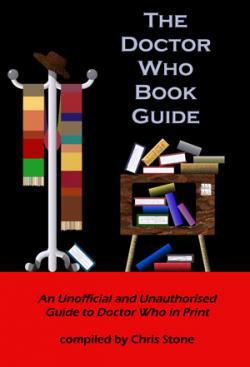
The Doctor Who Book Guide
Written by Chris Stone
Published by Long Scarf Publications
Published July 2013
Over the course of the last few decades I've amassed a large clutter collection of books relating to Doctor Who, and whilst many of the reference books of recent times are available to hand on a nearby bookshelf, the multitudes of fiction novels and redundant non-fiction volumes are lurking in boxes up in the loft, piled precariously on bookcases upstairs, or strewn haphazardly in columns in premium floorspace. However, the bigger question isn't on where they are but, more importantly, what have I actually got?!!

In one of my rational moments I did create a spreadsheet so that I know which book is in which box (though not necessarily where the box is in the loft, oops), but that only tells me what's actually there - the "known knowns" to coin a phrase - it doesn't indicate what I might be missing and still need to track down (the "unknown unknowns"). However, this predicament may have a solution in the form of The Doctor Who Book Guide, a book compiled by Chris Stone that aims to list every publication relating to the Doctor's travels in time, space, and bookshops.

The book is split into several sections, covering fiction and non-fiction publications, which are again split into their 'series' where applicable. For fiction, annuals and graphic novels are also included as well as the novels, as are fan publications. Similarly, non-fiction sections include the gamut of reference works, but also items such as Doctor Who Discovers, plus a summary of other factual books organised by publisher. Books that are related to spin-offs like Torchwood are also included in their own section.

Whether this book would be of use to you really depends on whether you are looking for an in-depth reference work delving into the history of Doctor Who literature, or if you are looking for a tome that you can use to keep track of your own collection. This book falls firmly into the latter category, as the author states in his opening paragraph: "This book is designed as a checklist for any Doctor Who Book collector.". So, if you were looking for a detailed history of Target books, for example, then you'd turn to The Target Book from Telos - what The Book Guide provides is a list of each publication of those novelisations. Taking the first entry as an example, The Abominable Snowmen details nine British 'incarnations' from the 1974 first edition from Universal/Tandem through to the 2011 reprint by BBC Books, noting things like which have a Chris Achilleos or an Andrew Skilleter cover - the overseas versions of the novelisation are also included in their own section. In my case, I've collected three such editions, my original 1978 edition which is well-read and well-thumbed from my youth, a copy of L’Abominable Homme de Neiges, and then a 'pristine' first edition I picked up much later. However, it's clear that if I were to pursue all of my 'known unknowns' then my existing storage facilities would be very hard-pressed very quickly!

Though I found the listings to be quite exhaustive and, as mentioned, a way to check off which editions I already have (the book does have a handy checkbox column for those who don't mind "desecrating" a book in that way!), its large format means that it falls into an "keep on the shelf" type book rather than a "take out on the field" type, which I actually think is the more useful function in the proactive pursuit of filling those holes in the collection. There are often times when I'll go into a second-hand bookshop and there'll be a pile of Doctor Who novels staring at me from the shelf, but I don't know exactly what I've got; having this to hand would be a godsend in those cases but it would be a bit impractical to carry the physical A4 book about - for that, I think a smaller 'Rough Guide' type size would perhaps be more useful. Actually, this sort of book begs to be turned into a mobile app which would make the task even easier - something for the author to consider for the next edition, perhaps!

In summary, this isn't an in-depth reference work on the history of Doctor Who books, so might not meet everyone's needs, but if you want as comprehensive a list of book releases as you can get (up to May 2013) then this book more than adequately provides that - and name a fan who doesn't like lists! However, I personally would have liked a format that could be used more 'pro-actively' (on-the-hunt) rather than 'passively' (checking off what you've got).

The Doctor Who Book Guide is available to purchase through E-Bay.



FILTER: - Books - Factual

The Companions: Fifty Years of Doctor Who Assistants

Thursday, 20 June 2013 - Reviewed by Emma Foster
Companions: Fifty Years of Doctor Who Assistants
Written by Andy Frankham-Allen
Released by Candy Jar Books, June 2013
With the 50th anniversary year of Doctor Who in full swing fans are being treated to a near unprecedented level of merchandising. Virtually every week there's a new gizmo, piece of apparel or toy for the deep of pockets to pick up. More than most, those who appreciate a good tome to while away the hours with are being spoiled with an avalanche of books to read about every possible bit of the Doctor's fictional universe and the people in the real world who bring him to life.

Joining my heaving bookshelves is the companions book by Andy Frankham-Allen, a book which promises to "look at the story of 35 of the Doctor's friends who have changed him into the man he is today". The book gives a basic overview of the Doctor's companions on television and their later adventures in the expanded universe of audios and books.

The book is written in a clear, consice fashion and gives a good overview of all the television companions. However, an issue that all books of this ilk face is who is this book aimed at? For long-term fans this book will not be offering many insights into the psyche of companions, or interesting discussions of continuity. For new fans one wonders about the appeal of reading a book of descriptions of things that companions did and felt in an episode when you could spend the £9.99 the book costs on a few DVDs and get a lot more value for your money. Gone are the days where the only way you could learn about companions of days past was by reading a book like David J. Howe & Mark Stammer's Companions of the 1980's - stories from every era are now widely and cheaply available, reducing the need for a book that fills in knowledge gaps.

The book sometimes comes across like it's been copy-pasted from Wikipedia in its character summaries, and it reads in an excessively dry manner. Also, the expanded universe companions are quite poorly served by the book - characters like Evelyn Smythe and Erimem for example are some of the most interesting and unusual companions to have been created, but they are barely mentioned, getting just about a page each. This is a major oversight in a book like this; a lot of novels from the wilderness years are now long out of print and filling in information about companions which newcomers to the series would have never heard of and would be unable to learn about by simply watching television would have elevated this book above the ordinary.

In a marketplace which has books like the majestic About Time series - surely the gold standard for fan books in any genre - The Companions book is a very poor relation.


FILTER: - Books - 50th Anniversary - Factual - 0957154887

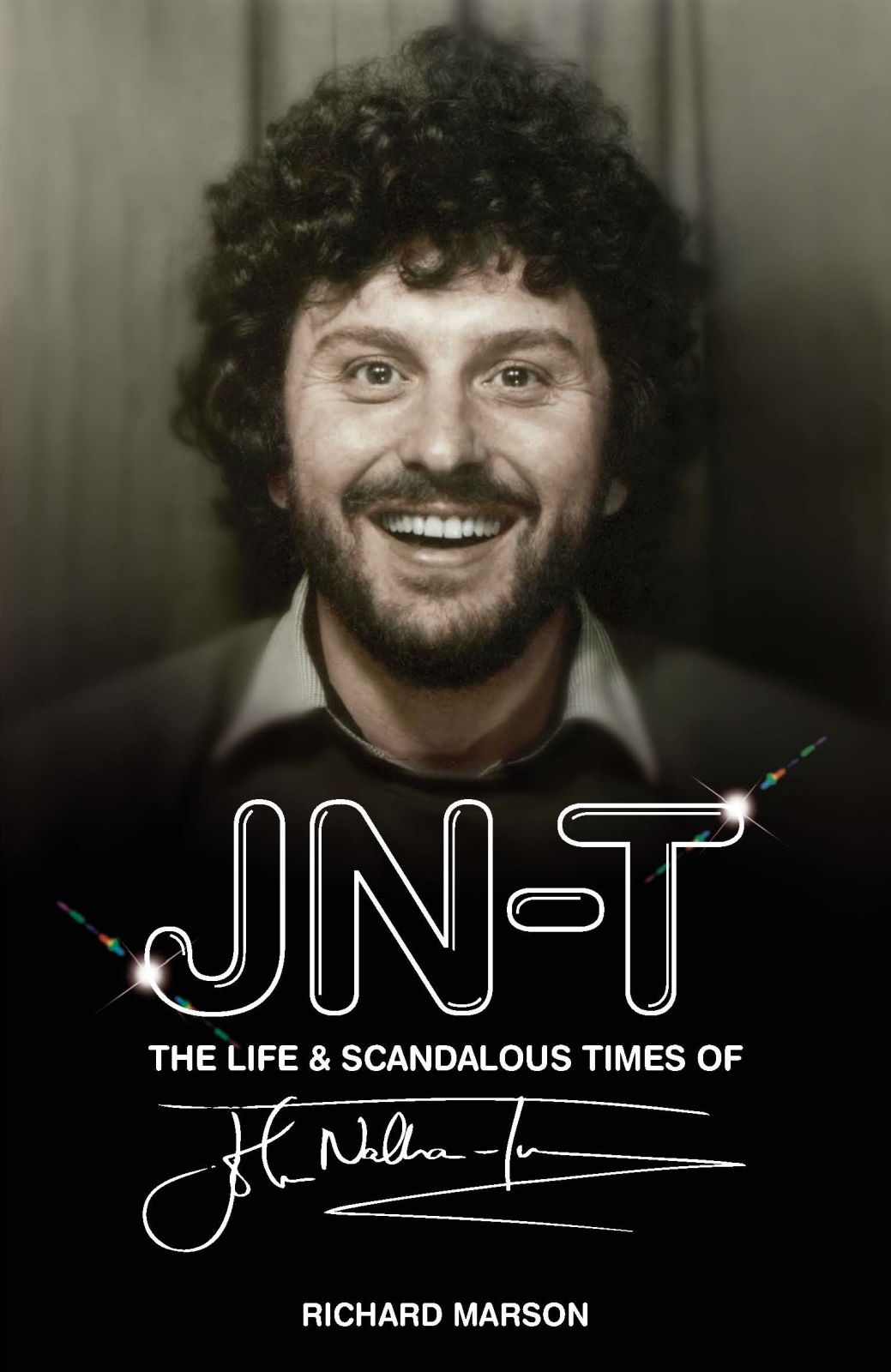
The Life and Scandalous Times of John Nathan-Turner

Tuesday, 9 April 2013 - Reviewed by Anthony Weight

The Life and Scandalous Times of John Nathan-Turner
Written by Richard Marson
Published by Miwk Publishing
Released April 2013
When I was a teenager, in the late 1990s, for a while I had an after-school paper round, delivering copies of the Brighton-based Evening Argus around my village in Sussex. It was never a paper of choice in our family, but while I had the round we used to buy a copy, which I would often peruse after I’d finished delivering the others.

I can distinctly remember noticing the features by John Nathan-Turner, an instantly recognisable name to any Doctor Who fan. He was a familiar figure from documentaries such as More Than Thirty Years in the TARDIS, and I’d read his memoirs serialised in DWM not long before. With a name like that it couldn’t be anybody else, and he even had his own byline photo to confirm it.

His features in the Argus were interviews with minor local celebrities, usually actors. I don’t remember how many of them he did – Richard Franklin is the only one that I specifically recall – but I do very clearly remember thinking, and even saying to my dad, “That’s a bit sad, he used to produce Doctor Who – how come he’s ended up writing cheap showbiz features for a local paper?”

As JNT: The Life and Scandalous Times of John Nathan-Turner reveals, the whole of Nathan-Turner’s post-Doctor Who career, which has perhaps been something of a mystery to fandom, could be described as being “a bit sad”. His name had become mud at the BBC, and despite a series of increasingly desperate and bizarre pitches, he was never able to persuade any broadcaster to work with him again, or to take up any of his programme ideas.

Richard Marson has done excellent work with this book, delving into the life and career of a man who seems utterly familiar on the one hand to Doctor Who fans, but who really it seems we only ever knew a certain side of, in a certain way. It’s the tragedy of many who are associated with Doctor Who that they are remembered only by us, and only for their Doctor Who careers – but Nathan-Turner’s association with the show became a burden even while it was ongoing.

Marson, a former producer and then editor of Blue Peter, himself points out the parallels between himself and his subject – both producers of long-standing, iconic BBC television series, who ended up having somewhat bitter partings from the programmes they had loved. But just because Marson has some empathy for Nathan-Turner, don’t make the mistake of thinking this book ever strays into the territory of being a hagiography – indeed, as you may have noticed from some of the press attention it has garnered, it’s anything but.

The fact that Marson is unafraid to tackle head-on some of the less pleasant aspects of Nathan-Turner’s character – and, to a greater extent, those of his partner Gary Downie – caused argument and debate in fandom in the weeks before the book was even released. There are some who are appalled by the revelations in the book. Some who are appalled that accusations have been made against men who are no longer alive and unable to defend themselves. Some simply embarrassed that Doctor Who has become associated with such squalor in its anniversary year, and particularly in the wake of the wider scandals that have engulfed the BBC in recent months.

It’s true that this book would almost certainly not have been written, at least not in this way, while Nathan-Turner and Downie were still alive. But that’s probably true of almost any honest biography, and time and distance can help to lend a vital objectivity. While it’s also true that the book contains details some Doctor Who fans may find unpleasant reading, in the same way that the book is not a hagiography, it’s never a hatchet job either. Marson is scrupulous in reproducing as many points of view and versions of events as possible, putting quotes from various interviewees one after the other to offer all the different sides of an argument, or versions of events.

The reader is left to make up his or her own mind about Nathan-Turner. Myself, I was chiefly left with the impression of a man I personally wouldn’t have ever wanted to know, but at the same time also a man rather sadly crushed by circumstances, and by a changing world at the BBC.

‘The BBC’ – dangerous as it always is to regard it as a single-minded monolith – almost comes across as a personality and a character in its own right in the narrative, and how interesting you find the book may depend on how much of an interest you have in the internal workings of the drama department, in the days of multi-camera videotape drama being made at Television Centre. I personally find such things fascinating, and it’s a real treat to get an insight into the labyrinthine workings of the Corporation and its drama department in the 1970s and 80s. It’s fair to say, however, that others may find such things less involving, and if you’re not really enthused by the structures and workings of the BBC drama department then this is possibly not the book for you.

Doctor Who fans generally, however, do tend to be interested in the behind-the-scenes workings of the show they love, perhaps more so than fans of any other television series. It’s why Doctor Who is quite possibly the most well-documented television programme ever made and why, as Russell T Davies once pointed out, in generations to come it will be the case study for how British television drama was made.

You sometimes have to remind yourself when reading this book that the fans do actually love the show, however. There are times when fandom comes across as being utterly repulsive and full of unpleasant people. I realise this isn’t entirely representative of how fandom was in the 1980s any more than the worst bitchers and moaners of Gallifrey Base or Roobarb's Forum represent it now, but I have to say I am rather glad I wasn’t old enough to be anywhere near fandom at the time. We perhaps don’t always appreciate how lucky we are in the 21st century, when fandom is so much larger, and online. If there’s a particular website or group of people you can’t get on with, you can easily find another place to share your love of the show, with people and things that make you laugh. No longer do you simply have to put up with whoever happens to attend your local group meeting.

Doctor Who and fandom recovered from the – at times – dark days portrayed in this book. But the shame of it is that Nathan-Turner never got the chance to. But on the other hand, I think he would have been pleased that he’ll be remembered, and that’s where the curse of Doctor Who is at least paying him something back. Jonathan Powell – refreshingly honest as an interviewee here – may well have been a far superior drama producer to Nathan-Turner, with a track record the latter couldn’t hope to match. He’s produced several BAFTA-winning productions of high quality. But he’ll never have a biography written about him. Nobody will ever research his life in detail, track down and speak to his teachers and schoolfriends. Trace the progress of his career in television, from the studio floor to the producer’s chair. When he dies, it will be little-noted outside of his friends and family.

Doctor Who can destroy careers. But Doctor Who fans remember. And because Doctor Who fans tend to be creative and industrious, we end up with superb books like this one. It’s not always an easy read, but I would recommend The Life and Scandalous Times of John Nathan-Turner to anyone with even a casual interest in television history in general, and Doctor Who’s history in particular.


FILTER: - Books - Biography

The Silurian Gift

Sunday, 10 February 2013 - Reviewed by Tom Buxton
The Silurian Gift
The Silurian Gift
Written by Mike Tucker
Released by BBC Books, February 2013
Make no mistake; we Doctor Who fans are a lucky crowd. It’s rare to find many television shows these days whose cult following is rewarded with such plentiful bonus releases on top of the annual new run of episodes, yet since 2006, BBC Books have consistently offered us the chance to indulge yearly Quick Reads adventures featuring the latest Doctor. Aimed at those fans who either simply don’t have the time to pick up Gareth Roberts’s lengthy one-hundred-and-ninth adaptation of Shada, or indeed those who wouldn’t be caught dead leaving WHSmith with anything heavier than the new Doctor Who Magazine, these brief jaunts have nevertheless enthralled readers young and old over the years, and The Silurian Gift aims to appeal to much the same wide audience.

Of course, with the 50th Anniversary year now upon us, and a multitude of celebratory series landmarks and live events undoubtedly on the way, it’s inevitable that Mike Tucker’s new novel carries with it a weight of expectation. Tucker rightfully opts out of including the new companion Clara in proceedings, so the words "Run, you clever boy, and remember" anywhere aren’t anywhere to be found this time around. While some might call this a missed opportunity on the author’s part, if anything in terms of both continuity and the ongoing Clara mystery it make things far simpler- much as Jacqueline Rayner’s 2009 romp The Sontaran Games served as a neat interlude between The Next Doctor and Planet Of The Dead, so too do the Eleventh Doctor’s adventures at the South Pole fit delicately between The Snowmen and Steven Moffat’s upcoming anniversary season premiere coming our way on March 30th.

Crucially, though, it’s the narrative fans will want to assess- can Tucker possibly live up to the series’ fifty-year legacy in the midst of such a rare event in television? Thankfully, the answer is in the affirmative: by reintroducing the Silurians in their 2010-2013 guise, yet meanwhile integrating elements of their classic series lore, the man behind the proverbial camera (or indeed, ‘behind the pen’ in this case) has created an innovative and unique adventure that would be impressive even by the show’s increasingly-high standards on screen. I won’t reveal anything concrete for fear of River Song knocking down my door moments later, but suffice to say that fans of Doctor Who And The Silurians, The Sea Devils and Warriors Of The Deep won’t be disappointed in terms of the reverence and respect that Tucker pays to those three iconic tales.

An author’s characterisation of the Doctor himself is always a vital component to the success of any Who novel, and in this respect Tucker excels. Clearly the three years that Matt Smith has spent in the role so far have given the writer time to accurately develop an incredibly realistic version of the eleventh incarnation of the Time Lord on paper, channelling Smith’s eccentric and humorous dialogue, his active physicality in adventures and indeed his hopeless sense of authority into each and every chapter in which the Doctor appears. The story’s other protagonist is a young journalist, Lizzie, who pretty much fits the bill as the average one-off companion, portrayed in a subdued manner with little overall impact on the Time Lord’s character arc. Tucker’s adversary characters are believable too, each of them either driven by that same lust for power as the likes of Van Statten and Solomon, or indeed a desperate desire to survive on a world which they previously inhabited.

There are one or two shortcomings that hold The Silurian Gift back from aspiring to the level of Human Nature and other iconic Who novels, however. The first flaw is one that’s plagued the Quick Reads saga that the show has adopted ever since 2006, the ultimate brevity of the text and thus the inevitably rushed pacing on Tucker’s part. Perhaps this is a drawback that these annual jaunts will never be able to avoid, yet seasoned readers could well wonder if building towards a climax earlier in the novel would have allowed the author to provide a more meaningful dénouement. Subsequently, although The Silurian Gift’s narrative contains a few unexpected surprises, it’s difficult to shake the feeling of déjà vu of another Silurian tale focusing on the eponymous reptiles’ attempts to take back the Earth, and indeed the inevitable final assertion that humans cannot yet live in peace with their predecessors; seriously, just how many taskforces will awake from hibernation thanks to the Doctor’s choice of postponing their return by 100 years or so? Steven Moffat appears to have grasped the fact that repetition can spawn tedium in this respect, having taken this intriguing race and utilising them in innovative ways in A Good Man Goes To War and The Snowmen, but it’s something that clearly still needs to be addressed in the New Series Adventures novels.

Nevertheless, having been provided with such a sterling first novel for the 50th Anniversary, it feels almost churlish to pick up on its minor stumbles. The Silurian Gift is without question one of the better outings produced within the BBC Books range of Doctor Who novels since they returned in 2005, a fast-paced and enthralling romp that should capture the imagination of both its intended reading-averse target audience and indeed the wider fanbase as a whole. Just as we’re no doubt hoping that this year’s episodes will feature blasts to the past while looking ahead to the future, Mike Tucker manages both challenges with aplomb and confidence. If great reads such as this and indeed the wealth of other CD and DVD releases and news announcements we’ve had so far in 2013 are any indication, then it seems this will be a truly sensational 50th Anniversary year for Doctor Who. Bring on the next ten months…


FILTER: - Books - Eleventh Doctor

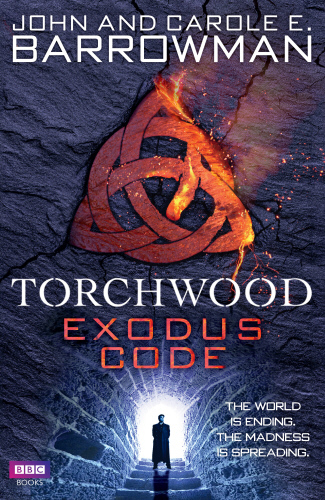
Torchwood: Exodus Code

Thursday, 13 September 2012 - Reviewed by Matt Hills
Written by John Barrowman and Carole E. Barrowman
BBC Books
UK Release - 13 September 2012
Available to purchase from Amazon UK
This review contains plot spoilers

Arguably, the greatest blessing of Torchwood is in danger of becoming a curse. I’m referring to Children of Earth – five episodes that pushed the TV show into a brave new world, and won it newfound international critical acclaim. And where Miracle Day seemed overly keen to repeat the CoE trick, this novel very much follows the same template yet again. It could almost be entitled Women of Earth; this time it’s women at locations around the globe who are affected by a mysterious madness which may have an alien origin. Like CoE, there’s an epic feel, and a historical precursor involving none other than Captain Jack Harkness. And like Miracle Day, the remnants of team Torchwood have a unique inside-track on exactly what’s happening. In line with its TV predecessors, there’s also a significant issue raised by fantastical events: patriarchal society’s reaction to an outbreak of ‘mad’ women. Captain Jack gets a lecture on the reactionary nature of presumed female “hysteria” (p.149), and mental health services are rapidly overwhelmed.

There must surely be a limit to the number of times that a CoE-style storyline can plausibly be mounted, and Exodus Code flirts with reaching this limit. No sooner has planet Earth put the Miracle behind it – seemingly carrying on without any real, lasting changes – then there’s another worldwide threat to contend with. What seemed format-breaking, edgy and energizing in the case of CoE now threatens to ossify constrictively into Torchwood’s latter-day format.

Exodus Code works best when it dares to innovate rather than when it’s slavishly aligned with recent TV incarnations. The introduction of “a Hub” (p.293) radically unlike the old Cardiff base is a clever, much-needed move, and has the potential to generate many more future stories. New team members are a little under-written, however, and few characters really come to life beyond the established gang of Gwen, Captain Jack, Rhys and Andy Davidson (all of whom are notably well captured). By contrast, Torchwood’s new fellow travellers seem more like a collection of gimmicks rather than rounded, fleshed-out people, although this may be a result of the breathless thriller genre that Exodus Code belongs to. For example, government adviser Alan Pride sounds like a fascinating figure, but we are only really told this via various info-dumps, rather than being shown Pride in action.

As might be expected from writers John and Carole E. Barrowman, there are some lovely nods to Torchwood continuity, whether it’s a mention of “Suzie”, discussion of morphic resonance, or the specific Torchwood kit that Gwen makes use of. And Rex Matheson even makes an appearance, ultimately amounting to little more than a guest cameo. Exodus Code ties back to Miracle Day in multiple, deft ways, though it’s hard to avoid inferring that The Powers That Be have placed Rex’s unusual status firmly off-limits. The same problem has dogged post-Miracle Day audios, leaving the odd feeling that these tales aren’t quite allowed to whole-heartedly continue Torchwood’s adventures.

Of course, a big part of this novel’s selling point lies with its authors. Captain Jack is especially well served throughout, returning to his omnisexual, zesty self after the detours of Miracle Day. There’s a real love and respect for Torchwood on show, as well as a beautifully unexpected nod to Sarah Jane Smith. Jack is pretty much rendered as Exodus Code’s central figure; Gwen doesn’t directly feature until roughly a quarter of the way into things.

The non-linear storytelling works effectively, even if events of the finale do become a little compressed and complicated. For instance, a clunky explanation on page 328 indicates that the scenario could probably have been more smoothly conveyed, though Gwen’s humorous response deflects any excess melodrama. And there are some compelling ideas woven around the title’s “code”, with the Barrowmans working unusual medical conditions, enigmatic designs, genetics, computer code and even artificial intelligence into the rich brew of thriller elements.

This page-turner revitalizes Torchwood by suggesting a possible way forward for the show, and by introducing a host of new characters who could be further developed in future. It’s just a shame that the consequences of Miracle Day seem so muted, particularly in terms of Rex’s character. John and Carole Barrowman are clearly gifted storytellers (both on this evidence and that of their earlier novel, Hollow Earth). I, for one, would welcome another Torchwood tale from the pair, perhaps something finally marking an exodus from the CoE code, and its gradually diminishing returns.


FILTER: - Torchwood - Books

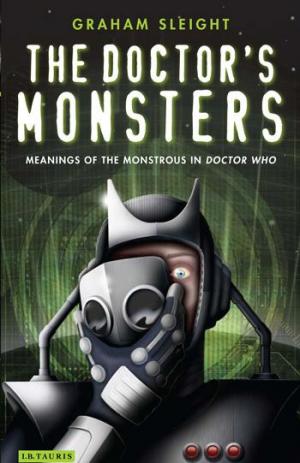
The Doctor's Monsters

Tuesday, 28 August 2012 - Reviewed by Chuck Foster

Written by Graham Sleight
I.B.Tauris
UK Release - 30 August 2012
Available to purchase from Amazon UK
For a show that revels in them, it is perhaps surprising that there haven't been as many books dedicated about the monsters of Doctor Who as one might expect. In the past, 'oldies' amongst us can look fondly upon our battered copies of the 1970s The Doctor Who Monster Book from Uncle Terrance, or more recently with 2005's Monsters and Villains by Justin Richards, but with several more years of 'monstrous' adventures to explore here we are presenting with a new tome from Graham Sleight.

However, those looking for a nice "A-Z" type book are likely to be disappointed, as the aim of this book is somewhat different, as the back cover explains:
This book takes a new look at the monsters and asks what inspired them and lies behind them. Why are we so scared of monsters? Why so they look and act the way they do? How do they reflect the time and place that the series is broadcast in?
Such a description immediately conjures up an image of in-depth analyses of monsters and their environment, and how contemporary socio-political influences affected the way in which they were realised - fortunately, we don't have to worry about the redundancy of auxiliary performance codes, however, as Sleight presents his arguments in clear, concise prose, and in a reader-friendly manner.

The Book


On opening the book, the first thing you notice is what appears to be a very strange ordering of monsters within the Contents. The Autons ... check ... The Weeping Angels ... check ... Kroll ... erm, okay ... The Primords ... pardon ... The Borad ... WTF? There is method in Sleight's madness, of course, as his intention is to show how the different monsters relate to one another. Thus, Kroll in couched within terms of its being a force of nature like the Angels; after the Primords, the Borad is compared with Stahlman from their story in a "Faustian overreacher" role. The next chapter deals with the Axons and a theme of beauty and ugliness formulated from Timelash. And so on. Building an ongoing narrative between chapters is a great idea, but is hard to maintain, becoming absent in a number of chapters later in the book.

All the big-bads are there of course, with the two major monsters split into 'eras' (four for the Daleks and three for the Cybermen). The coverage does seem a little 'random' at times (eg. the Mandrells), but as Sleight points out, the book can't be completely comprehensive and everybody has their favourites that might not be covered (what, no Zygons?!!). However, there is a handy Glossary at the back that does provide a brief A-Z of monsters in the show.


I also found that the story synopses tended to be quite lengthy; whilst I can appreciate that some readers may not be familiar with the stories in question, such information is readily available elsewhere so a simple summary would suffice and we can get into the monster nitty-gritty. There was also a tendency to slip into 'series politics' which obscured the monstrous discussion that I actually expected. This reached its nadir in "The Cybermen II", which concerned itself more with why the Cybermen stories epitomised what was wrong with eighties rather than the creatures themselves - indeed, with Attack of the Cybermen I thought the depictions of how the Cyber-conversion process depersonalised humanity and the mental affects of partial conversion had on the Telos workforce would be more worthy of exploration than the interminable debate over who actually wrote the story!


However, in many ways I found the book a little too light for my tastes, and for me it was hard to judge who was the intended audience for the book. It clearly isn't for children or the casual reader, but neither is it for those fans who love to delve into heady intellectual debate or critique. Instead, the chapters tended to paint broad strokes over the various monsters covered, and I often wondered what point was being made.


All the standard themes are covered, so oil-drilling in the North Sea is debated for Inferno, the European Union and Miner's Strikes in for Peladon, etc.

Marshmen - not Solonians?


Conclusion

The book sets out to look into the meaning of the monstrous, and certainly covers a variety of the creatures that populate the series


and falls firmly into same style of related non-fiction from IB Tauris (like Booy's Love and Monsters published earlier this year).


FILTER: - Books - Factual